



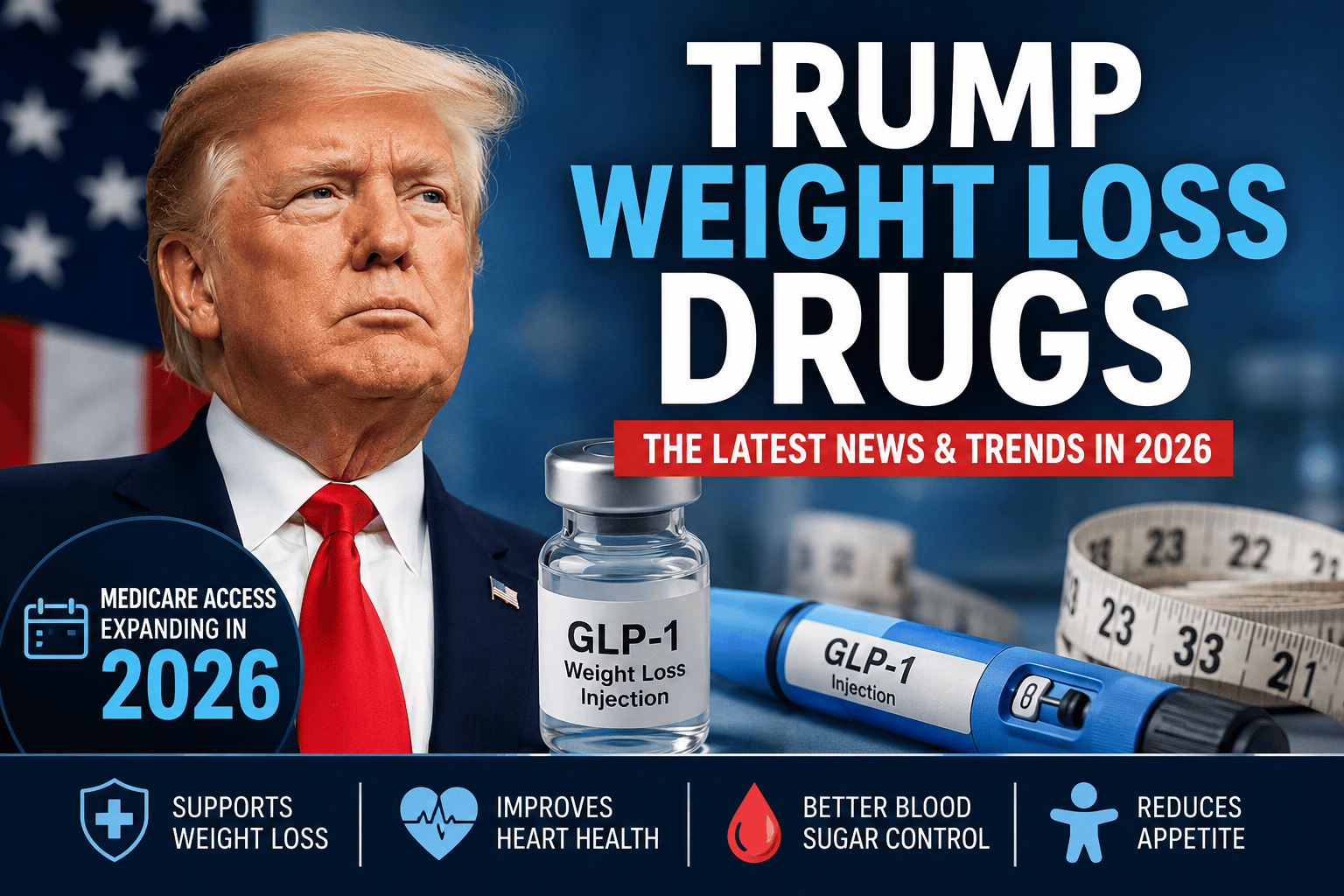
Trump Weight Loss Drugs
The phrase “Trump weight loss drugs” is rapidly trending on Google as Americans search for updates about GLP-1 medications like Ozempic, Wegovy, and Zepbound. The recent attention comes after President Donald Trump announced new plans connected to Medicare access and lower pricing for weight loss medications in 2026. These developments have pushed obesity treatment and prescription drug costs into one of the biggest healthcare conversations of the year.
GLP-1 drugs were originally created to help people manage type 2 diabetes. However, doctors soon discovered that these medications could also help patients lose significant amounts of body weight. Now millions of Americans are using these drugs for obesity treatment, and political leaders are beginning to treat weight loss medications as a major public health issue.
Recent reports show the Trump administration is supporting expanded access to GLP-1 medications for Medicare patients beginning in mid-2026.
What Are GLP-1 Weight Loss Drugs?
GLP-1 medications mimic hormones that help regulate blood sugar and appetite. These injections slow digestion, reduce hunger cravings, and help people feel full longer. Some of the most popular medications include:
- Wegovy
- Ozempic
- Zepbound
- Mounjaro
These drugs have become extremely popular because many users report losing 10% to 20% of their body weight over time when combined with healthy eating and exercise.
Medical researchers also continue finding additional benefits linked to these medications. New studies suggest GLP-1 drugs may reduce risks related to heart disease, strokes, and cardiovascular complications.
Why Is Trump Connected to Weight Loss Drugs?
The phrase “Trump weight loss drugs” became popular after the Trump administration introduced policies aimed at lowering prescription drug prices and increasing access to GLP-1 medications for seniors.
According to recent reports, Medicare patients may soon receive access to GLP-1 medications for around $50 per month under a temporary bridge program launching in July 2026.
The administration has also promoted the “Most Favored Nation” pricing strategy, designed to reduce U.S. drug prices by aligning them more closely with prices in other developed countries.
These announcements sparked strong reactions online because obesity affects millions of Americans, while many patients previously struggled to afford medications costing more than $1,000 monthly without insurance coverage.
Why Americans Are Interested in Weight Loss Drugs
The obesity epidemic in the United States continues growing every year. Many adults struggle with:
- Slow metabolism
- Emotional eating
- Sedentary lifestyles
- High sugar consumption
- Medical conditions affecting weight
Traditional dieting often produces short-term results, causing many people to regain lost weight. GLP-1 drugs changed the conversation because they target appetite regulation directly instead of relying only on willpower.
Many patients describe the medications as “life-changing” because food cravings decrease dramatically. Social media platforms are filled with before-and-after transformations, celebrity discussions, and patient testimonials.
This growing demand has also increased political pressure to make these medications affordable for middle-class and senior citizens.
The Benefits of GLP-1 Medications
Research published in 2026 suggests GLP-1 medications may provide more than just weight loss benefits. Scientists now believe these drugs could improve overall metabolic health.
Some reported benefits include:
Reduced Appetite
Patients often eat smaller portions naturally without extreme hunger.
Better Blood Sugar Control
GLP-1 medications were originally developed for diabetes management and remain effective for glucose regulation.
Cardiovascular Benefits
Studies indicate reduced risk of heart attacks and strokes in some high-risk patients.
Improved Energy
Some users report increased mobility and physical activity after losing excess weight.
Long-Term Obesity Treatment
Doctors increasingly view obesity as a chronic disease requiring medical treatment rather than temporary dieting.
Concerns and Side Effects
Despite their popularity, GLP-1 drugs are not perfect solutions. Experts continue warning patients about potential side effects and long-term concerns.
Common side effects include:
- Nausea
- Vomiting
- Digestive discomfort
- Fatigue
- Diarrhea
Some critics also worry about muscle loss during rapid weight reduction. However, newer studies suggest the muscle loss may be less severe than initially feared when combined with exercise.
Doctors recommend patients use these medications only under medical supervision.
Rising Competition in the Weight Loss Industry
Pharmaceutical companies are racing to create next-generation obesity drugs. New experimental treatments are already showing promising results.
Researchers are currently testing newer compounds that may outperform today’s leading GLP-1 medications.
Several future medications may combine multiple hormone pathways to produce even greater fat loss while preserving muscle mass.
This competition could eventually lower prices and expand treatment options for patients worldwide.
Political Debate Around Weight Loss Drugs
Not everyone agrees on how these medications should be funded. Some lawmakers support broader insurance coverage, while others worry about the enormous cost to Medicare and taxpayers.
Healthcare experts estimate nationwide obesity drug coverage could cost billions annually. Critics argue the government cannot afford universal access, while supporters say obesity-related diseases already cost the healthcare system far more.
The debate continues as both political parties recognize obesity as a major national health challenge.
The Future of Weight Loss Medications
The weight loss drug market is expected to grow rapidly throughout 2026 and beyond. Analysts predict obesity medications could become one of the largest pharmaceutical industries in history.
Future trends may include:
- Oral weight loss pills
- Lower-cost generic alternatives
- Personalized obesity treatments
- Expanded insurance coverage
- Improved medications with fewer side effects
As new research emerges, weight loss medications are increasingly being viewed as long-term health tools rather than temporary diet aids.
Final Thoughts
The “Trump weight loss drugs” trend reflects a larger national conversation about obesity, healthcare costs, and access to modern medical treatments. GLP-1 medications have transformed the weight loss industry, and new government initiatives may soon make these drugs more affordable for millions of Americans.
While these medications show promising results, experts still encourage patients to combine them with healthy nutrition, physical activity, and professional medical guidance for long-term success.